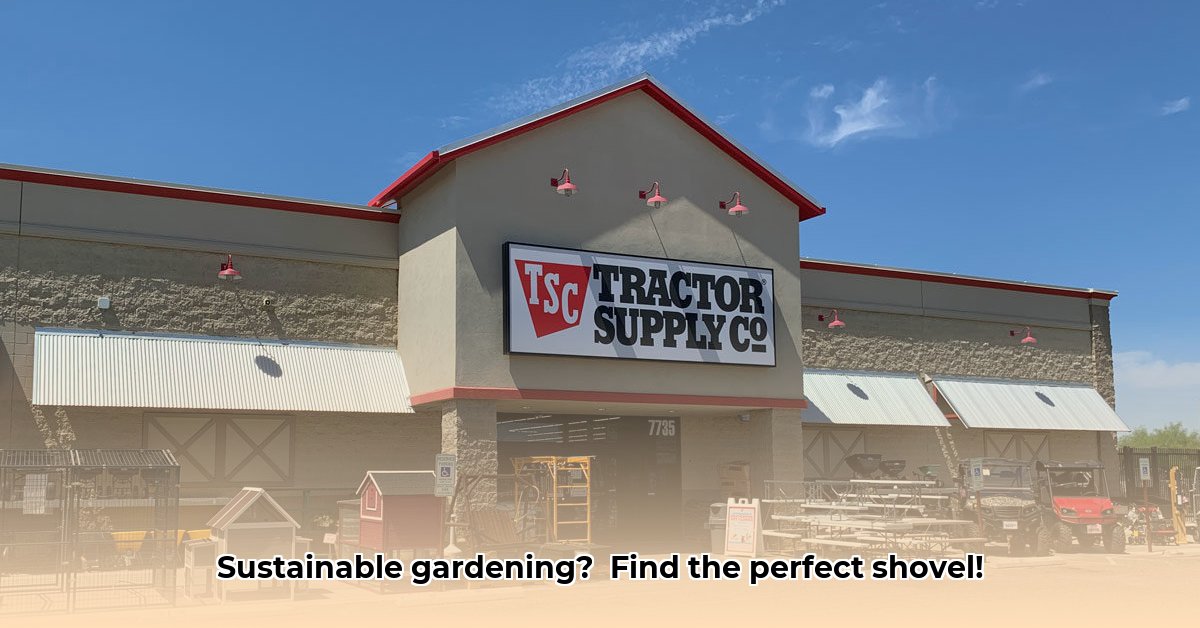
Optimizing Your Garden with the Right Tools: A Sustainable Approach
Sustainable gardening isn't just a trend; it's a responsible approach to cultivating healthy plants while minimizing environmental impact. Choosing the right tools, starting with a high-quality shovel, is a crucial first step. Tractor Supply offers a variety of shovels, each designed for different tasks and soil types. But how do you select the best shovel for your sustainable gardening needs? For raised bed options, check out Tractor Supply raised beds.
Selecting the Ideal Shovel: Material, Shape, and Handle Considerations
The perfect shovel is much more than just a digging implement; it’s an extension of your gardening philosophy. Tractor Supply offers a range of options, from heavy-duty steel spades for breaking up hard soil to lightweight aluminum scoops ideal for delicate seedlings. Consider these factors:
Material: Steel shovels are incredibly durable but heavier. Aluminum shovels are lighter but may not withstand the toughest jobs. Fiberglass handles provide a good compromise – strong yet lighter than steel. Which option best suits your physical capabilities and gardening intensity?
Shape: A square shovel excels at moving large quantities of soil, perfect for preparing new garden beds. A round-point shovel is ideal for digging individual planting holes. Consider this: What are your primary gardening tasks?
Handle: Wooden handles provide a classic feel but require more maintenance. Fiberglass and steel handles are typically more durable and low-maintenance, offering long-term value. How long do you realistically anticipate using your shovel before requiring replacement?
The following table summarizes these considerations:
| Shovel Type | Best Use | Pros | Cons |
|---|---|---|---|
| Round-Point Shovel | Digging holes, planting individual plants | Precise digging, versatile for various planting tasks | Not ideal for moving large quantities of soil |
| Square Shovel | Moving large volumes of soil, creating garden beds | Efficient for moving bulk material, great for leveling | Less precise for digging individual planting holes |
| Spading Fork | Aerating and turning over soil, loosening compacted earth | Improves soil drainage and aeration, beneficial for root crops | Not as effective for moving loose soil or digging holes |
Tractor Supply Shovels and Sustainable Gardening Practices
Choosing a shovel impacts sustainability beyond the initial purchase. While steel shovels are robust, their manufacturing process is energy-intensive. Lighter aluminum shovels can reduce this impact, but their shorter lifespan might lead to increased waste over time. What's the most environmentally conscious approach?
The key is to prioritize longevity. A durable, high-quality shovel, even if initially more expensive, reduces the need for frequent replacements, minimizing waste compared to cheaper alternatives requiring more frequent purchases. Proper care and maintenance significantly increase the lifespan of any tool, contributing directly to sustainable practices. Isn't a long-lasting shovel ecologically beneficial?
Precision Farming: A Technological Leap for Sustainable Agriculture
Beyond the shovel, advancements in precision farming technologies are revolutionizing sustainable agriculture. These technologies enable farmers to optimize resource use, increase yields, and reduce environmental impact. But the high initial cost can be prohibitive, particularly for smallholder farmers. How can this challenge be tackled?
Overcoming Financial Barriers to Precision Farming Adoption
The high upfront cost of precision farming equipment presents a considerable obstacle for many smallholder farmers. Overcoming this hurdle demands multi-pronged strategies:
Phased Adoption: Start with cost-effective technologies like GPS-guided tractors or yield monitors. Expand gradually as you see returns. This measured approach minimizes risk while maximizing benefits.
Leasing and Rental Options: Leasing or renting equipment avoids significant upfront investment, reducing financial burden and allowing farmers to adjust to the technology.
Government Subsidies and Grants: Many governments offer financial assistance for precision farming technologies. Thorough research of available programs can drastically reduce initial costs.
Cooperative Purchasing: Pooling resources with other farmers through cooperatives leverages collective buying power, securing lower prices on equipment.
Building a Support Network for Success
Successful precision farming implementation depends not only on technology but also on knowledge and support.
Formal Training: Invest in training programs, often offered by universities and agricultural extension services, for skills development.
Peer Networks: Engage with fellow farmers already using precision farming techniques to share experiences and best practices.
Mentorship Programs: Seek out mentorship programs connecting experienced farmers with newcomers, providing valuable guidance.
Long-Term Sustainability through Precision Farming
The benefits of precision agriculture extend beyond short-term financial gains. It is a pathway to long-term sustainable agricultural practices. Data management, strategic partnerships, and integrating sustainable farming practices are key elements for long-term success.